 | |
|
The Sautner property – adorned with anti-fracking posters and inhabited by some of the most vocal and visible of fracking critics -- had become a particular symbol of the tensions that divided the community. Julie and Craig were featured in various high-profile accounts of the conflict as either victims, heroes or phonies. The aquifer that provided water to their home on 1101 Carter Road, and to 64 other homes in
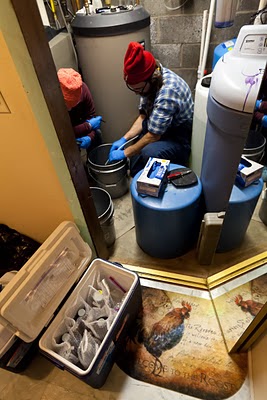 |
EPA tecs sample water at Sautner home in 2012
Photo: JAMES PITARRESI
|
As part of an eventual settlement, the Sautners sold their property to a Cabot subsidiary for $167,500. Cabot demolished the vacant house, company spokesman George Stark told me after my visit last month, because the company was planning to sell the property, and it was more marketable without the
structure. Yet that answer doesn’t square with information on a deed that has since been filed in the Susquehanna County Court House in Montrose. After demolishing the house, Cabot sold the 3.3 acre parcel to Tim and Debbie Maye – owners of an adjoining property -- for $4,000. (Perhaps the absence of the house is an asset to Cabot, which retained the mineral rights on the Sautner acreage, although it’s worth noting that the DEP has forbid the company to drill in the area until it resolves the persistent problem of methane seeping into some water supplies in nine square miles around Carter Road. It's also worth noting that the Mayes have a history with Cabot that's antithetical to the Sautner's. The Mayes, who were once critical of the company, became shale gas supporters after they settled pollution claims of their own )
The most striking aspect of the sale, however, is this: The new owners of 1101 Carter Road are bound by certain conditions set forth in the deed, in parlance that may fairly be described as epic. It forbids a “residence or dwelling for human habitation” on the land. The time frame for this and other restrictions is “forever,” to be observed by future generations as “covenants running with the land.”
The sale, first reported this week by Laura Legere for State Impact, represents a kind of denouement to a story that I have been following for years while reporting for the Press & Sun Bulletin, in writing Under the Surface, and for this blog. The Sautners were initially enthusiastic and expectant supporters of shale gas development when the landman convinced them to lease their mineral rights in 2008. Their story, and the story of more than dozens others affected by Cabot’s operations, captures a complication that belies a common industry pitch: Everyone’s a winner with shale gas development. Landowers get royalties, others get jobs, and there is cheap abundant energy for all. Claims of water contamination are exaggerated, fabricated, or trumped up by overreaching regulators.
In reality, there are economic winners and losers, as well as substantial environmental risks and trade-offs. The risks and trade-offs are hard to quantify because the industry is exempt from reporting requirements to disclose what it puts into the ground to stimulate wells, and what comes out. Whether you find this acceptable is likely to depend on whether you trust the industry more than government, your tolerance for mineral extraction in places you care about, and your belief in the wisdom of investing heavily in a fossil based energy system to meet 21st century challenges.
We know this: In some places gas is flowing, and with it, economic bounty to a mix of parties. But we also know this, like most things in life, is a circumstantial and transitory condition. The reality of the matter is that it often takes teams of bankers, lawyers, real estate agents, insurance actuaries, and regulators to sort it all out while being mindful of split estates, law suites, lease language, liabilities, and policy that can cut both ways depending on the proficiency and determination of various stakeholders. In the end, the example on 1101 Carter Road left a new land “covenant” forbidding “human habitation” at a place once called home by the Sautners.

