Showing posts with label dimock. Show all posts

Saturday, January 25, 2014

Solutions to H20 pollution elude officials in Cabot gas field Five years after blast, Pa officials continue tests in Dimock

Five years after the explosion of Norma Fiorentino’s water well signaled all was not well in Cabot’s Marcellus shale gas operation in northeast Pennsylvania, state environmental officials are still trying to gauge the impacts of drilling on the water supplies of local residents.

The agency is scheduling another round of tests to see whether methane levels in Dimock water wells are safe, Colleen Connolly, a spokeswoman for the Department of Environmental Protection, confirmed this week. It's the latest step in an investigation that literally began with a bang on New Year's Day, 2009. The explosion of the Fiorentino well prompted an investigation by the DEP that concluded water wells serving at least 19 homes contained explosive levels of natural gas that had migrated underground from Cabot’s nearby drilling operations.  Since then, dozens of water wells in Susquehanna County have been taken off line due to methane contamination.

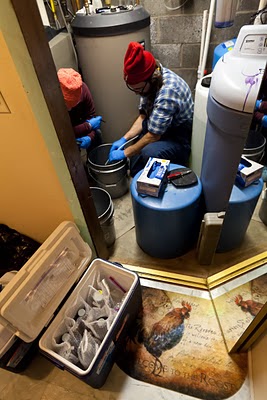
Some of the Dimock residents agreed to a settlement with Cabot, negotiated by the DEP, that compensated the parties with payments worth twice the assessed value of their properties, and systems to filter their water. Others have held out. They believe the systems, which require maintenance, are not an effective answer to the problem and do not filter other harmful chemicals associated with drilling. The settlement was finalized in 2010 under DEP Secretary John Hanger (now a gubernatorial candidate).  Hanger, who headed Governor Ed Rendell’s DEP, had originally pushed for an $11 million infrastructure project, to be paid for by Cabot, to restore fresh water to the residents. Cabot opposed the plan for a water line, and the administration withdrew it soon after Tom Corbett, an industry supporter, was elected governor.

Although Cabot continues to develop the Marcellus Shale throughout Susquehanna County, the DEP has banned the company from drilling within a 9-square mile area around Carter Road until it fixes an unremitting methane problem there.

Working with the settlement as a blueprint, Cabot has restored water to some but not all homes through special filtration systems or bottled water. But problem areas persist. Several polluted homes have been abandoned, including two on Carter Road bought by Cabot. The company bought 1101 Carter Road, once home to outspoken fracking activists Craig and Julie Sautner, and demolished the ranch house last year. It then sold the vacant parcel to a neighbor for a fraction of the purchase price, with a condition written in the deed that no residence could ever be built there. Late last year, Cabot bought the home of Mike Ely, on the south end of Carter Road, although the company has not answered questions about its plans for the contaminated property.

Several other homes in the area remain vacant after having been sold to other parties, reportedly for interest in mineral rights. Three vacant homes happen to be near Cabot’s failed Costello gas well, which officials have indentified as a possible source of methane pollution.  This week, Connolly reiterated that the Costello well, near the intersection of the south end of Carter Road and State Route 3023, was “unviable” and “”remedial work is continuing at the gas well, and Cabot and DEP continue to evaluate results at the water wells.”  In addition to fluctuating methane levels, previous tests have shown levels of iron and manganese that were elevated but within standards in some water samples. Elevated levels of these elements are “not uncommon during gas migration,” she reported.

Before Cabot can resume drilling in the banned zone, Connolly said, the company must “demonstrate compliance” with the 2010 Consent order. “We have scheduled another round of testing to determine whether the gas migration event has ceased,” she added. Connolly could not immediately say how many homes will be included in the sampling collection. Sources in the field told me that the DEP plans to test all 19 homes listed in the consent agreement, but that the agency has not been granted access to all the homes.

As I have found with many stories about shale gas, a central problem is a lack of information. Some of this is because state regulators, dependent on updates from companies that are exempt from many disclosure laws, are still trying to figure out exactly what is going on. And some of it is due to the fact that companies are reluctant to share certain information that casts operations in a negative light. This is all complicated by some residents who feel what is happening on their property is their business, others who want to show the world what they want the world to see, and still others working in good faith to expose and understand problems with the intention of making things better. In short the problem is cast in a muddle of projections from stakeholders with widely divergent interests and ideological footing. Chief among these is Cabot, which possesses the facts about what is happening at its restricted sites and underground, test results, along with rights to the land under question.

In addition to speaking with Connolly and people in the field, I have called and emailed Cabot spokesman George Stark over a period of months for an update. Here is one of my email queries from Dec. 10. 2013:

Hi George,
I’m following up on Cabot’s recent purchase of Mike Ely’s property on Carter Road and have some questions related to that:
Why did Cabot buy the property? 
What plans does the company have for it?  
What is the status of the nearby Costello well? Is it all fixed?
Does the company expect to be able to resume development in the 9-square mile “no drill zone”?
Also, a question related to the former Sautner property now owned by the Mayes: Why did Cabot forever prohibit building a home on the property as part of the land covenant?
 Here is Stark’s response, which came a month later, on Jan. 9, after I left several phone messages:
Tom,
Got your message yesterday about the former Ely property. 
Cabot entered into a private business transaction with the prior owner of the property. The sale was agreed to by both parties and we are now the current owners. 
George

Trying to apply his answer to the questions at hand in any meaningful way was fruitless, so I emailed Stark again:

Hi George 
Thanks for responding. But your statement does not answer any of my questions. Here they are again: 
Why did Cabot buy the property? 
What plans does the company have for it? 
What is the status of the nearby Costello well? Is it all fixed? 
Does the company expect to be able to resume development in the 9-square mile “no drill zone”? 
Also, a question related to the former Sautner property now owned by the Mayes: Why did Cabot forever prohibit building a home on the property as part of the land covenant?

That was January 9. Since then I have also left voicemails. I am still waiting for a reply. If Stark’s response, or lack of a response, has any journalistic value in the meantime, it illustrates how some companies deal with these kinds of unpleasant questions. They ignore them, or offer a statement of fact that appears to be authoritative but is actually irrelevant.

There are people on all sides of the debate over the merits and risks of shale gas development who share a sense or frustration over lack of information. A group of drilling proponents called Dimock Proud has been especially critical of the DEP for implementing the no-drilling zone in Dimock without engaging all the people who live there, including those eager to see shale gas development proceed. In their view, the DEP has been operating too much out of the public eye. The group represents people who are in position to make money when Cabot drills on their property. The Dimock Proud web site features letters to the DEP complaining that the agency has ignored their requests for information -- specicially, explanations of the no drill zone around the problem wells and why the ban applies to people in the 9-square mile area who want to see their shale gas developed. The group stresses this compaint:

Dimock landowners have written you countless letters, signed petitions that we sent to you, and absolutely begged you to let us out of that arbitrary 9-square miles. You did nothing! You didn’t even acknowledge receipt of the petitions.

The controversy over drilling and fracking in Dimock is one of many in countless communities in dozens of developing shale gas basins across the country. Some problems are unique and some universal. But Dimock, just across the border of New York State, was one of the first where the media spotlight focused intensely on the gas boom that is transforming the country. And given the persistence of problems there, it's where it might also shine the longest.


Wednesday, January 8, 2014

Trespassing case tests driller’s control over leased land Activist banned from parks, schools, stores w/ Cabot lease

Vera Scroggins in front of a drilling rig in Dimock Township
PHOTO JAMES PITARRESI
After being charged with trespassing, anti-fracking Vera Scroggins has been banished from land leased by Cabot Oil & Gas. That’s no small deal. The Texas drilling company has leases on more than 200,000 acres -- nearly 40 percent -- of Susquehanna County where Scroggins lives, including rights to property of friends, neighbors, stores, parks and schools.

The Cabot v. Scroggins trespassing case might have been relegated to a journalistic footnote in a national conflict over shale gas development and high volume hydraulic fracturing. It has long been standing practice (and common sense) for companies to restrict access to operations where crews are using heavy equipment and hazardous chemicals under high pressure to drill wells and fracture bedrock a mile deep in the ground.

Scroggins admittedly crossed into designated work areas on occasion, but there were no signs denoting trespass zones, she said, and her ventures into drilling territory in each case were in good faith to openly ask questions and seek information. (Some background on this in a moment.) The remarkable and possibly groundbreaking aspect of this case, however, is not the charge or the defense, but the resulting preliminary injunction the Susquehanna Court of Common Pleas issued on October 21, 2013. Pending trial of the case this spring, the order forbids Scroggins from setting foot on land owned or leased by Cabot, “including but not limited to” well sites, well pads, and access roads. That language, interpreted by Scroggins lawyer Gerald Kinchy, in effect forbids Scroggins from going to certain school grounds, her auto mechanic of 23 years, many other businesses, the county jail, and homes of dozens of friends, among other places. Doing so puts her at risk of contempt of court. (See the full order, embedded below.)

Cabot’s action raises the broader issue of how much control energy companies have over land they lease. While mineral extraction is their stated intention, many standard leases give companies ill-defined and seemingly limitless discretion over land use. “When drilling companies lease rights to land for mineral extraction,” Kinchy said, “does that mean they have rights to exclude other people from that land, even property owners?”

Apart from the Scroggins case, that question has mostly applied to practical matters of daily extraction operations. A company such as Cabot might own rights to a large tract, but it is generally concerned about gaining or restricting access to active work areas. Conflicts might crop up over where exactly a company might build a pad, access road, or pipeline, and at what inconvenience or loss of land use to the landowner. When that happens, lease language and the respective parties’ appetite and resources for litigation come into play, with the company often in a position of leverage.

The Scroggins case breaks new ground. Issues of practicality (and enforcement) aside, it probes whether a company can legally keep a person from stepping foot on leased land outside of established work zones, including public spaces where others are allowed.

Now for some background. Cabot Oil & Gas operations have drawn numerous violations from the state and much national and international media coverage due to recurring water pollution problems in Dimock Township. The company has been a particular target for critics and activists, including Scroggins, who lives in the neighboring township of Brooklyn. (More about that here.)

In Under the Surface, I describe Scroggins this way:

 … a grandmother, amateur videographer, and advocate for many causes, including home births, home schooling, and no mandated childhood vaccinations. In 2009, she took up the cause as a watchdog against oil and gas operators who began leasing large tracts of northeast Pennsylvania to develop the Marcellus Shale. “We’re extra eyes and ears for the DEP,” she told [a community organizer]. “They don’t have enough workers and we have to pick up the slack.”  
Footage from some of Vera’s vigilante patrols in 2009 shows encounters with roughnecks and pipeline workers, some reacting with amusement or annoyance to the woman with a home video camera showing up at these remote and often inaccessible work sites and peppering them with questions. Some called her “ma’am” and briefly addressed her questions; some directed her to the foreman, who almost always asked her to leave; and some simply ignored her or walked away. These brief encounters typically punctuate long unedited footage of vacuum trucks, excavation equipment, and hay bales. Vera also taped public forums and interviews with residents … recounting their experiences with gas development. These videos she posted online, where they joined a broad and growing collection of depictions of Susquehanna County gas development by other independent media, advocates … and professional news outlets. They generally … presented aspects of drilling that lent themselves to visuals: truck traffic, derricks, flaring, fracking, and heavy machinery cutting swaths through the countryside.

Until the injunction, Vera had intensified her efforts, serving as a tour guide for parties interested in seeing and learning about drilling and fracking from a perspective other than that offered by company tours and commercials. On occasion, she has helped me locate operations in the region (viewable from  public roads.)

Cabot poses a sound argument that those venturing onto work sites without permission pose an annoyance, distraction, and/or safety threat. But Vera’s presence has become iconic of another kind of threat to the company – bad public relations and control over its image. The scope of the injunction against Scroggins invites wonder whether Cabot attorneys who crafted the language were unintentionally imprecise, or whether they are testing a strategy to eliminate their Scroggins PR headache once and for all, while sending a message to other activists.

George Stark, a company spokesman, was unavailable to answer this and other questions.


Friday, November 22, 2013

Cabot buys second polluted residential property in Dimock 12-acre parcel on Carter Road flanked by faulty gas wells


The former Mike Ely propety, now owned by Cabot
Cabot Oil & Gas has closed a deal for a second residential property affected by chronic methane pollution in the heart of its prolific gas operations in Susquehanna County, Pennsylvania.

The Texas-based company paid Michael Ely $140,000 for the 12-acre property that includes a doublewide modular home, according to records filed in Susquehanna County Courthouse Wednesday.  The property – now vacant -- borders the intersection of the south end of Carter Road with State Route 3023 in Dimock Township.

The state Department of Environmental Protection has identified at least two malfunctioning gas wells operated by Cabot bordering the property, including the Gesford 3 well, several hundred yards to the north off Carter Road, and the Costello 1 well, just to the south off Route 3023.

Cabot demolished the former Sautner in September 
The agency has forbidden Cabot to drill more wells in a nine-square mile area around the intersection until the company resolves problems with these and other shale gas wells that – according to the DEP inspectors – are causing methane pollution.

The former Ely property sits less than a mile south from another polluted residential property on Carter Road that Cabot bought for $140,000 from Craig and Julie Sautner last year. Cabot demolished the three-bedroom ranch in September and sold the empty lot to a neighbor for $4,000. The new deed includes a clause – called a land covenant -- that forbids residential dwellings on the property.

Cabot bought both the Sautner and Ely properties through a subsidiary called Susquehanna Real Estate 1 Corp.

Ely ancestral home across from Cabot's newly acquired lot
The former property of Mike Ely is part of a larger swath owned by generations of the Ely family since 1858. Bill Ely, Mike’s father, lives in the family’s large ancestral colonial home near the banks of Burdick Creek, which runs under a bridge connecting Carter Road with Route 3023. Bill Ely and his wife, Sheila, are among families in the area that depend on bottled water. Bill told me he has no intention of selling his 19th century house to the company, even though his water is not drinkable.

“I’m not leaving” Ely said Thursday. “My family’s been in this home for generations.”

Susquehanna County and operations centered in Dimock have been the source of both boon and bane for Cabot, which in 2013 was the second largest natural gas producer in Pennsylvania behind Chesapeake Energy. In the first half of the year, Cabot had 15 of the top producing wells in the state concentrated in its leasehold in Susquehanna County – an area experts call a “sweet spot” for Marcellus Shale production. But production has been beset by problems. Both Mike and Bill Ely were among more than 30 families in the area that settled a law suit with Cabot for damages related to water pollution for an undisclosed amount in 2012. The controversy continues, as Cabot, under the watch of the DEP, attempts to fix problems that have prevented it from drilling any new wells in a 9-square-mile region around the Carter Road area. Some of the gas wells have been plugged or shut down, so residents living over them have seen royalty payments dwindle.

Hazards found in some residential water wells include methane, arsenic, bacteria, and various heavy metals that occur naturally. Methane can make water flammable and pose risks of explosion in wellheads and enclosed spaces. Arsenic, heavy metals, and bacteria can cause illness. Drilling can open pathways that allow contaminants to move through the ground, but the extent to which this happens is open to scientific and legal interpretation. Cabot continues to challenge the DEP findings publically with claims the contaminates are a result of naturally-occurring phenomenon.

The DEP began investigating problems in the region after a residential water well on the north end of Carter Road exploded at the home of Norma Fiorentino on January 1, 2009, shortly after Cabot began ramping up operations to produce gas from the Marcellus Shale with the controversial practice of horizontal drilling and high volume hydraulic fracturing. Since then, the area has been the focus of a national controversy over the impacts of shale gas development on residential communities.

During my visit to the area this week, I noticed that a service rig at the Costello gas well had been removed. George Stark, a spokesman for Cabot, was not immediately available for comment about recent developments. Stark told me in September that the rig, which has been at the site for months, allowed crews to “monitor” the casing of the gas well, which appeared sound.

DEP officials explained it differently. They had not pinpointed a source for the problems affecting three homes near the well, including the Ely properties. But they had determined that the suspect Costello gas well was "unviable" and would have to be plugged. In an email response to my query earlier this fall, DEP spokeswoman Colleen Connolly reported that Cabot was ”continuing remedial efforts” at the Costello gas well and “evaluating the effectiveness” of the work.  Methane levels were fluctuating, she said. Additionally, tests had shown levels of iron and manganese that were elevated but within standards in some water samples. Elevated levels of these elements are “not uncommon during gas migration,” she reported.

Update 5:25 p.m. EST. In response to my request for an update this week, Connolly said in an email this afternoon that “remediation work” is continuing on the Costello 1 well.  But the department’s characterization of the status of the well remains vague. In Connolly’s words, the well is "essentially unviable," but DEP officials are "not aware of the gas well having been officially plugged.”


Tuesday, October 22, 2013

The razing of 1101 Carter Road: The rest of the story… Land “covenant” in deed forbids “human habitation”

The Sautner home became focus of the antifracking movement
PHOTO JAMES PITARRESI 
When I last visited Carter Road, a contractor for Cabot Oil & Gas was demolishing the former home of Craig and Julie Sautner, the anti-fracking activists who had relinquished their three-bedroom ranch as part of a settlement with the Texas drilling company. This was part of a larger dilemma in their hometown of Dimock, Pennsylvania, where the Sautner’s water well was polluted by nearby Cabot drilling operations, according to records from the state Department of Environmental Protection. It’s a charge that Cabot has denied publically and settled privately – with the Sautners and dozens of other plaintiffs.

The Sautner property – adorned with anti-fracking posters and inhabited by some of the most vocal and visible of fracking critics -- had become a particular symbol of the tensions that divided the community. Julie and Craig were featured in various high-profile accounts of the conflict as either victims, heroes or phonies. The aquifer that provided water to their home on 1101 Carter Road, and to 64 other homes in
EPA tecs sample water at Sautner home in 2012
Photo: JAMES PITARRESI
the area, was the focus of a controversial EPA investigation that found pollution at levels posing safety threats in 8 percent of the wells. Instead of making recommendations, the federal agency deferred to the industry’s solution, approved by the state, which was to deliver water in bottles and tanks to affected homes and provide filtrations systems. The Sautners and some other residents found those measures ineffective, and they unsuccessfully pursued a water line from the nearby village of Montrose – a measure that would have cost Cabot more than $11 million.  (A more full account of that story here.)

As part of an eventual settlement, the Sautners sold their property to a Cabot subsidiary for $167,500. Cabot demolished the vacant house, company spokesman George Stark told me after my visit last month, because the company was planning to sell the property, and it was more marketable without the
structure. Yet that answer doesn’t square with information on a deed that has since been filed in the Susquehanna County Court House in Montrose. After demolishing the house, Cabot sold the 3.3 acre parcel to Tim and Debbie Maye – owners of an adjoining property -- for $4,000. (Perhaps the absence of the house is an asset to Cabot, which retained the mineral rights on the Sautner acreage, although it’s worth noting that the DEP has forbid the company to drill in the area until it resolves the persistent problem of methane seeping into some water supplies in nine square miles around Carter Road. It's also worth noting that the Mayes have a history with Cabot that's antithetical to the Sautner's. The Mayes, who were once critical of the company, became shale gas supporters after they settled pollution claims of their own )

The most striking aspect of the sale, however, is this: The new owners of 1101 Carter Road are bound by certain conditions set forth in the deed, in parlance that may fairly be described as epic. It forbids a “residence or dwelling for human habitation” on the land. The time frame for this and other restrictions is “forever,” to be observed by future generations as “covenants running with the land.”

The sale, first reported this week by Laura Legere for State Impact, represents a kind of denouement to a story that I have been following for years while reporting for the Press & Sun Bulletin, in writing Under the Surface, and for this blog. The Sautners were initially enthusiastic and expectant supporters of shale gas development when the landman convinced them to lease their mineral rights in 2008. Their story, and the story of more than dozens others affected by Cabot’s operations, captures a complication that belies a common industry pitch:  Everyone’s a winner with shale gas development. Landowers get royalties, others get jobs, and there is cheap abundant energy for all. Claims of water contamination are exaggerated, fabricated, or trumped up by overreaching regulators.

In reality, there are economic winners and losers, as well as substantial environmental risks and trade-offs. The risks and trade-offs are hard to quantify because the industry is exempt from reporting requirements to disclose what it puts into the ground to stimulate wells, and what comes out. Whether you find this acceptable is likely to depend on whether you trust the industry more than government, your tolerance for mineral extraction in places you care about, and your belief in the wisdom of investing heavily in a fossil based energy system to meet 21st century challenges.

We know this: In some places gas is flowing, and with it, economic bounty to a mix of parties. But we also know this, like most things in life, is a circumstantial and transitory condition. The reality of the matter is that it often takes teams of bankers, lawyers, real estate agents, insurance actuaries, and regulators to sort it all out while being mindful of split estates, law suites, lease language, liabilities, and policy that can cut both ways depending on the proficiency and determination of various stakeholders. In the end, the example on 1101 Carter Road left a new land “covenant” forbidding “human habitation” at a place once called home by the Sautners.

Friday, September 13, 2013

Cabot demolishes home central to Dimock water dispute Methane problems persist in 9-square mile no-drilling zone

The Sautner home became focus of the antifracking movement
PHOTO JAMES PITARRESI 
Cabot Oil & Gas executives may have ongoing problems with operations in Dimock Pennsylvania, but the status of water quality at 1101 Carter Road is no longer one of them.

After years of controversy, Cabot last year paid an undisclosed amount to owners of that property, Craig and Julie Sautner, to settle claims that drilling contaminated their water well. As part of the deal, Cabot acquired the 3.6-acre property, the status of which remained a matter of speculation until last week when flatbeds unloaded a demolition excavator and multiple dumpsters in the driveway of the vacant home.

The arrival of the demolition crew marked a concluding chapter of a conflict that began in September, 2008, when the Sautner’s water suddenly went bad after Cabot crews drilled a nearby gas well into the Marcellus Shale. Under oversight by the Pennsylvania Department of Environmental Protection, Cabot attempted to restore the Sautner’s water with a system of filters and tanks, which took up a substantial part of the basement. The system proved ineffective, and the company began delivering bottled water to the house.

Since then, the three bedroom ranch, sitting tidy and plumb under a canopy of maple trees off the bucolic dirt road, has become a symbol of the anti-fracking movement in the heart of Cabot’s most prolific well field.

EPA investigation begins at Sautner home in Jan. 2012
PHOTO JAMES PITARRESI 
As drilling intensified in the area, Cabot began dealing with similar water complaints at dozens of other homes in the Carter Road area. After investigating the complaints, the DEP held Cabot drilling operations into the Marcellus Shale responsible for methane contamination in 18 water wells, and eventually ordered the company to install an $11 million pipeline to deliver water to the homes. Cabot resisted, and the DEP’s order caused a political fracas that split the community. A group of residents, including those receiving royalty payments and other compensation from the company, sided with the industry and characterized those demanding the water line as malcontents. Plans for the water line were dropped after Tom Corbett, a gas drilling proponent, was elected governor in 2010. But the DEP continued to enforce a ban on drilling in a 9-square mile area around Carter Road where problems persisted.  The primary constituents affecting the wells – methane, arsenic, barium and other metals -- are naturally occurring, and also a product of drilling.

My coverage of this story for the Press & Sun-Bulletin, and later in writing Under the Surface and posts for this blog, brought me into the Saunter’s home on several occasions. The house, with three bathrooms and a finished basement, was fairly new and well kept. A barn-star adorned unblemished vinyl siding next to the garage entrance, and America the Beautiful was inscribed in a silvery stencil on the wall opposite the entrance in the main foyer. The interior decor reflected the Sautner’s fondness for wall art and country nick knacks, carefully arranged, along with framed photos of the Sautner’s teenage children – Cody and Kelly -- and their various pets, including Emmi, an overprotective Chihuahua that had to be contained when visitors arrived.

Cabot contractors demolish the former Sautner property
PHOTO TOM WILBER
The home drew national media attention in 2012, when the federal Environmental Protection Agency, assessing data compiled by Cabot and the DEP, determined that the aquifer feeding the Sautner’s well and other homes in the area showed hazardous levels of pollution. Richard Fetzer, the EPA’s site coordinator, summed it up this way in an internal memo on Jan. 19, 2012: “What is clear is that this data strongly suggests that hazardous substances have been released and are present in some home wells at levels that may present a public health concern.”

The federal agency began it’s own series of tests, and found arsenic, barium, manganese, chromium, and methane in five of 61 wells at levels “that could propose a health concern.” The agency determined no follow up was necessary, however, because residents of affected homes had been notified and polluted wells were taken off line or equipped with filters. The contamination -- in roughly 8 percent of the wells tested -- was from naturally occurring compounds that are also used in or associated with drilling operations, which can exacerbate existing problems or introduce new ones.

Frustrated that Cabot avoided accountability for the problem, the Sautners emerged as dedicated and nationally visible critics of the industry with a degree of animosity that grew with each passing year. They filled their yard and garden with anti-fracking posters, and jugs of brown water. They appeared on television and radio shows and were featured at anti-fracking rallies and concerts, typically carrying the water jugs that became something of a trademark of the movement. Notably, the Sautner’s story was featured in Gasland, the Emmy-award winning film by Josh Fox that premiered on HBO in 2010, and which was largely responsible for inspiring the anti-fracking movement.

The Sautner’s approach -- blunt, antagonistic, and sustained – was eventually met by counter attacks from Cabot and gas supporters, both locally and nationally, determined to discredit their claims. While Josh Fox portrayed the Sautners as victims-turned-activists in Gasland, filmmaker Phelim McAleer, from Ireland, depicted them in his film Frack Nation as self-serving and exploitive phonies. (My reviews of both films can be found here.)

A new message at 1101 Carter Road
PHOTO TOM WILBER
The story is complicated by water quality tests that show different things at different times to different parties, and a settlement with Cabot that forbids parties to talk about the case. We know that, while the Sautner home apparently passed spec when the EPA took samples in January, 2012, it had a documented history of pollution prior to that. We also know that the EPA confirmed water problems at five homes. And we know that, in addition to whatever other terms the Sautners settled with Cabot, they received  $167,500 for their property; and it struck me as newsworthy when I heard that contractors working for Cabot had arrived last week to demolish the home.

I placed a call to Cabot spokesman George Stark, who told me that the company had a potential buyer for the land and that it was more marketable without the house.  Stark said he did not know if the land would be developed, and could not offer other details.

An obvious line of thinking, reflected on anti-fracking list serves, is this: With no home, there is no well, and with no well, there is no liability related to water pollution, at least at 1101 Carter Road. But water pollution at other homes continues to plague the company. Regulators are now focusing on methane pollution in three water wells about a mile south of the Sautner home, where Carter Road tees into State Route 3023. The DEP has indentified Cabot’s Costello gas well at this location as the primary suspect.

Stark said that a service rig, which has been at the site for months, allows crews to “monitor” the casing of the gas well, which appears sound.

DEP officials explained it differently. They have not pinpointed a source, according to a recent report in the Scranton Times Tribune quoting DEP spokeswoman Colleen Connolly. But they have determined that the suspect gas well is "unviable" and will have to be plugged. In an email response to my query, Connolly reported that Cabot is ”continuing remedial efforts” at the Costello gas well and “evaluating the effectiveness” of the work.  Methane levels are fluctuating, she said. Additionally, tests have shown levels of iron and manganese that were elevated but within standards in some water samples. Elevated levels of these elements is “not uncommon during gas migration,” she reported.

New and substantial research shows that methane migration from shale gas development is not an isolated problem. A recent study published by the Proceedings of the National Academy of Sciences shows that methane concentrations to be, on average, six times higher for homes with water supplies a kilometer or less from Marcellus Shale gas wells. Ethane, another component of natural gas, averaged 23 times higher for homes within a kilometer from natural gas wells.

The Sautners were not on hand to see the demolition of their former home. After the settlement last year, they moved away – first to Ithaca New York, and later to Tennessee. The new owner, not surprisingly, had removed all the anti-fracking signs in the yard and replaced them with a single blue placard that read “Dimock Proud! Where the water IS clean and the people are friendly.”

The excavator raised its boom and swung it toward the side of the garage. It came to an abrupt stop just before impact. The operator then raised the talons of the bucket to the top of the garage, and guided them in a slow arch, peeling back a swath of roof. The machine began biting into the asphalt tiles, roof boards and rafters. Within an hour, the two-car garage was mostly gone, and the machine continued chewing apart the house and packing wads of siding, insulation, wiring and splintered timber into dumpsters. By the end of the next day, all traces of the house were gone, except the foundation, which was filled in shortly thereafter.

The Sautners are bound by the non-disclosure clause from discussing the Cabot settlement or the water issue. But Craig Sautner did offer this about the demolition: “Their (Cabot’s) actions speak louder than words. There is nothing that I can say that tells the story any better than what they did.”

Time will tell whether 1101 Carter Road remains an uninhabited part of Cabot’s oil patch. The company, meanwhile, is staking much of its future on the gas field in northern Pennsylvania. According to Richard Zeits, reporting for the financial website Seeking Alpha, Cabot officials anticipate at least 3,000 future drilling sites on several hundred thousand acres in Susquehanna County. Yet at the heart of this area, where it all began, the future of the nine-square mile no-drill zone remains awkwardly bound to its legacy of water issues.

Note: This video of the demolition was taken by Vera Scroggins, an anti-fracking activist who lives in Susquehanna County.


Sunday, August 11, 2013

Records add context to EPA’s aborted Dimock mission Letter from federal hazmat chief shows focus on Cabot

EPA officials begin investigation in Dimock in January 2012
PHOTO BY JAMES PITARRESI
More records are coming to light that show the EPA ended its investigation last year into the impact on fracking on Dimock water wells in the face of political pressure.

After finding arsenic, barium, manganese, chromium, and methane in wells at levels “that could propose a health concern” the agency declared no follow up was required because residents of affected homes had been notified and polluted wells were taken off line or equipped with filters. The contamination -- in roughly 8 percent of 61 wells tested -- was from naturally occurring compounds that are also used in or associated with drilling operations, which can exacerbate existing problems or introduce new ones.

The issue – one of national policy (or not) -- is recently getting the attention it deserves. Last month Neela Barnerjee of the LA Times reported that an internal EPA power point presentation showed that agency staff warned that methane pollution in Dimock was a likely result of shale gas operations that can cause long-term damage to aquifers. On this blog, I have reported that the EPA quietly turned the results of its investigation over to a sister agency called the Agency for Toxic Substances and Disease Registry, where the outcome faces an uncertain fate. The ATSDR lacks the enforcement muscle of the EPA, has a relatively small budget and staff, and is notoriously slow.

But there’s more to it, and much of the back-story can be found in a series of internal correspondence and documentation uncovered through a freedom of information request by Laura Legere, of the Scranton Times Union. These memos and others now available on line show EPA officials were urgently concerned about pollution documented in Cabot’s own testing of the water, as well as files kept by Pennsylvania Department of Environmental Protection. This was the starting point of the EPA investigation, which intended to “characterize” conditions that were causing disconcerting test results.

A memo dated Dec. 7. 2011 (date corrected from original post) from Jon Capacasa, director of the EPA’s Water Protection Division, captures the urgency of the EPA’s request to the ATSDR to evaluate the health risk of chemicals already documented by Cabot and the DEP.

We believe that the private wells in and around the Dimock area have been negatively impacted by the Cabot natural gas drilling process as evidenced by the presence of methane, butane, propane, ethane, ethene, etc., related gas compounds and also the presence of high concentrations of secondary contaminants like aluminum, iron, manganese, etc. 
We have recently received additional data identifying additional organic chemicals Butyl benzyl phthalate, Triethylene Glycol and 2 Methoxyethanol among others....
This is an urgent matter to the Agency so completion of your review within the next two months is requested.

While EPA staff found the matter urgent, they also noted that test results were not produced by the agency itself. To get their own data, staffers were mindful about overstepping the agency’s jurisdictional boundaries, which are limited due to fracking industry’s exemptions from the Safe Drinking Water Act and the Resource Conservation and Recovery Act. In justifying the Dimock investigation, the EPA recognized the issue to be “nationally significant and precedent setting” under the federal Superfund law, as detailed in this Jan. 19, 2012 scoping memo from site coordinater Richard Fetzer.

EPA routinely acts under CERCLA [superfund] to protect public health first while it acts to further define contamination. …
Because the action appears to be nationally significant and/or precedent-setting, the Region will continue to coordinate closely with Headquarters. EPA also will maintain coordination and communications with the PADEP. In taking this action, EPA is aware of and has considered the potential applicability of the natural gas exclusion under CERCLA, the Bensten Amendment under the Resource Conservation and Recovery Act (RCRA) and the exclusion to the definition of the “underground injection” under the Safe Drinking Water Act (SDWA). EPA has concluded that this action is appropriate under CERCLA at this time.

The original scope of work, which was later dropped, included determining the source of pollution. In a letter dated Jan. 6, 2012 notifying Cabot attorney Kevin Cunningham of the investigation and a request for records, EPA’s hazardous cleanup director Ronald Borsellino stated the agency was “investigating the source, extent and nature of a release or threatened release of hazardous substances” related to the company’s operations.

Fetzer’s Jan. 29 internal memo sumed it up this way:

What is clear is that this data strongly suggests that hazardous substances have been released and are present in some home well at levels that may present a public health concern. 
Current data does show arsenic and manganese at higher levels than may be typically found in post drilling samples.  Since arsenic and manganese are naturally occurring substances, EPA’s assessment will include comparison of background concentrations present. 

All this qualification, of course, was partly the product of due diligence by the EPA to make its investigation withstand the expected pushback from the state and the industry and to make a case for involvement under Superfund.

States generally are protective of their jurisdiction over shale gas, and this is a critical piece of context. The EPA was conducting a similar investigation in Pavillion, Wyoming, where it found evidence that shale gas development polluted water wells of homes on the Wind River Reservation. Predictably, the agency faced a hostile reception by Wyoming Gov. Matt Mead, a shale gas proponent who characterized the federal action as an example of regulatory overreach. (The EPA recently aborted its plans for a peer reviewed study of its work in Pavillion and turned the investigation over to the state.) The EPA faced a similar reaction from Pennsylvania state officials.

On Jan 5, 2012, (then) Pennsylvania DEP director Michael Krancer wrote to EPA Regional Administrator Shawn Gravin, citing Wyoming Governor Mead’s criticism of the EPA’s investigation in Pavillion. In Krancer’s words, that criticism involved:

the technical, scientific and cooperation shortcomings of EPA’s activities with respect to that state regarding Pavilion and there is no need here to catalogue those in his [Mead's] letter. Suffice it to say that we hope the EPA’s efforts here not be marked by the same rush to conclusions and other deficiencies here as it was and continues to be in respect to the Pavilion matter. . I ask that your efforts be guided by sound science and law rather than emotion and publicity.

Krancer copied a group of Pennsylvania legislators on his letter.

All this correspondence shows how the EPA was in a defensive position from the get go, even though its tests later affirmed a persistent problem with arsenic and methane in some wells. In one well, EPA tests found arsenic at nine times the federal safety standards, prompting the agency to call for an alternative source of water  because the levels posed “significant threat to the residents health,” according to an internal memo from Dennis Carney of EPA’s region 3 to his colleagues. (The name of the well's owner was redacted in the file.)

But there is still a missing piece: Why did the agency suddenly drop its investigation without accounting for the source of pollution in Dimock or characterizing the broader groundwater conditions, as it set out to do? The answer has something to do with jurisdictional limits due to the exemptions from federal law. But an overriding element involves Obama’s campaign platform for a second term, when the president was publically and enthusiastically pitching the merits of shale gas and portraying himself as an industry ally. As the campaign heated up in 2012, the EPA investigation could have backfired if held up in the hands of his opponents as evidence that the president is a regulatory zealot. In fact, Cabot Oil & Gas president Dan Dinges wasted no time exploiting this angle in an open letter -- shortly after the company was put on notice by the EPA – which was promptly featured in a report by Mark Drajem for Bloomberg:

EPA’s actions in Dimock appear to undercut the president’s stated commitment to this important resource,” Chief Executive Officer Dan Dinges wrote today in a letter to EPA Administrator Lisa Jackson. “EPA’s approach has caused confusion that undermines important policy goals of the United States to ensure safe, reliable, secure and clean energy sources from domestic natural gas.
The EPA said Jan. 19 that it would deliver water to four families in Dimock, where residents say their water has been contaminated during hydraulic fracturing by Cabot. The EPA will also test water at 60 homes to assess whether any residents are being exposed to hazardous substances, the agency said.
Dinges, who also is Cabot’s chairman, said today that the company provided more than 10,000 pages of data to the EPA and there is “no credible evidence” that the water needs further analysis by the federal agency. 
“It appears as though the EPA’s decision is politically motivated and not based on a legitimate desire to address environmental concerns,” the company said in a statement issued with Dinges’s letter.

Dinges was clearly hitting effective buttons. In the world we live in, politics in addition to science is an element of policy making. And here is an example where the direction of science was driven by political forces and interpretations.


Wednesday, July 31, 2013

Record shows EPA staff warned of Dimock water pollution Report exposes disconnect between results and action


Last week the LA Times reported that the federal EPA dropped an investigation into water pollution associated with shale gas development in Dimock Pennsylvania despite evidence of problems. The reason: political pressure from the industry.

I have been covering the Dimock story since before the EPA investigation began in January 2012. (It provided one of several narrative lines for my book Under the Surface.) The recent LA Times report neatly squares with the story line that has been developing over the last two years. Specifically, the disengagement of the EPA represents a story that works in favor of the extraction of oil and gas from shale through the controversial process of high volume hydraulic fracturing, aka fracking. Yet it’s one that conflicts with industry spin – that the EPA dropped investigations in Dimock and elsewhere because they lack merit or have failed to turn up any problems tying fracking with groundwater contamination.

The story in Dimock goes even deeper than the recent LA times report, and I will get to that shortly.

First a recap: The LA Times report, by Neela Banerjee, cited leaked information from the EPA that showed “staff members warned their superiors that several wells had been contaminated with methane and substances such as manganese and arsenic, most likely because of local natural gas production.” More specifically, Banerjee reports:

The presentation, based on data collected over 4 1/2 years at 11 wells around Dimock, concluded that "methane and other gases released during drilling (including air from the drilling) apparently cause significant damage to the water quality." The presentation also concluded that "methane is at significantly higher concentrations in the aquifers after gas drilling and perhaps as a result of fracking [hydraulic fracturing] and other gas well work."

This is important and relevant, but not all that much of a shock, given what the record already showed. In July 2013, after months of field study, the EPA publically released 725 pages of testing results from the Dimock investigation and a brief summary. The agency found hazardous substances -- specifically arsenic, barium, manganese and methane -- “at levels that could present a health concern” in the water supply of five of 64 homes – roughly 8 percent. The report concluded that no further action was required because “In all cases the residents have now or will have their own treatment systems that can reduce concentrations of those hazardous substances to acceptable levels at the tap.” In short, households had been notified of the problem, and industry was making provisions to provide filters or alternative water supplies. (My original post can be found here, with a photo gallery of investigation here.)

The mainstream press, encouraged by industry public relations, widely mis-interpreted the EPA press release as a sign that “the water is safe.” Since then, and until now, the Dimock story has faded into background of the fracking debate for the mainstream press, but not for those who have been following the story closely. In addition to raising this issue again, Saturday’s LA Times piece brings to light another critical dynamic: The decision to discontinue the federal investigation in Dimock, and forego the next logical investigative step to trace the pollution to its source, was not made by the rank and file staffers on the ground immersed in the investigation, but by higher-ups in Washington. The LA Times report is consistent with information I have gleaned from various sources in the EPA. It’s also consistent with another decision by the agency’s leadership to abruptly drop an investigation into a link between fracking and ground water contamination in Pavillion, Wyoming.

In 2011, the agency issued a summary of its investigation into polluted water wells near fracking operations on the Wind River Indian Reservation in Pavillion.  Testing of two deep monitoring wells found:

detection of synthetic chemicals, like glycols and alcohols consistent with gas production and hydraulic fracturing fluids, benzene concentrations well above Safe Drinking Water Act standards and high methane levels. Given the area’s complex geology and the proximity of drinking water wells to ground water contamination, EPA is concerned about the movement of contaminants within the aquifer and the safety of drinking water wells over time.

Testing of two drinking wells found:

chemicals consistent with those identified in earlier EPA samples include methane, other petroleum hydrocarbons and other chemical compounds. The presence of these compounds is consistent with migration from areas of gas production. Detections in drinking water wells are generally below established health and safety standards. In the fall of 2010, the U.S. Department of Health and Human Services’ Agency for Toxic Substances and Disease Registry reviewed EPA’s data and recommended that affected well owners take several precautionary steps, including using alternate sources of water for drinking and cooking, and ventilation when showering. Those recommendations remain in place and EnCana [an operator] has been funding the provision of alternate water supplies.

Yet, facing intense pressure from the industry to butt out, the EPA abruptly decided to shelve plans to push ahead with a peer-reviewed study of the project, and relinquished control of the investigation to state officials supportive of the industry and unenthusiastic for federal involvement in their regulatory affairs. The EPA also dropped a similar investigation in Weatherford Texas in the face of legal threats from the industry.  (More on that here.)

It’s hard to overstate the symbolic importance of all this. EPA involvement represents a special kind of threat to the industry because it could open the door for federal regulation under the Safe Drinking Water Act and the Resource Conservation and Recovery Act. The first governs what goes into the ground, and the second governs the handling and disposal of hazardous waste. The fracking industry enjoys exemptions from both.

In words and action, Obama has shown enthusiasm for shale gas development. It follows that he has directed his EPA not to interfere with an industry that is beginning to spread its wings across the lower 48 states (map here) with the promise of cheap domestic energy. Meanwhile, Obama, whose first term was focused on economic stimulation, is now choosing his environmental battles as he deals with pushback from the industry and its many allies in Congress. A day prior to withdrawing from Wyoming, Obama announced on the world stage that he would seek to regulate coal emissions under the Clean Air Act. The Keystone Pipeline is another bargaining chip that remains on the table.

The LA Times piece may energize the debate over the EPA’s retreat from the fracking issue and shake an air of complacency about states’ ability and willingness to oversee the industry. At the very least, it has provoked some powerful environmental lobbies. Kate Sinding, an attorney for the National Resources Defense Council, wrote in her blog this week:

EPA simply walked away and asked the public and the residents of Dimock to take its word for it. Indeed, the agency did not even mention the word “methane” at all in its press release announcing the end of the investigation. As a result, it was widely reported in the mainstream press that EPA had found the water in Dimock was “safe” to drink (see, for example, here and here). This perception persists among many in the general public.

So now for the part of the story that the LA Times piece does not cover:

After the EPA issued the Dimock results last year, the agency quietly turned the investigation over to a sister agency called the Agency for Toxic Substances and Disease Registry. (There was no mention of this in the EPA press release summarizing the Dimock results, but links to records, along with my report, can be found here). The ATSDR lacks the enforcement muscle of the EPA, but it does advise the agency concerning health impacts from pollution. The Dimock investigation faces an uncertain fate in the hands of the ATSDR, which has a relatively small budget and staff and is notoriously slow.  Has the Dimock investigation been sent there to languish on the shelves of unattended science?

Since the EPA’s file on Dimock landed in the ATSDR office, I have been checking in with agency spokeswoman Bernadette Burden. Last year she said the agency did not have a time frame for the results and their release. Asked for an update this week, she replied “we hope to have it out before the end of 2013.”

It’s a reply that, not surprisingly, offers plenty of political wiggle room.

Saturday, June 22, 2013

Obama’s plans for shale gas diminish EPA involvement


It’s no mystery that President Obama is tying the country’s energy future to shale gas development. He articulated this commitment first in his campaign and later in his State of the Union Address. Now his actions show just how supportive his administration is to the industry’s quest to build demand and discourage regulation.

Last month, Obama approved policy for shale gas export terminals – a move the industry needs to capitalize on global markets and buoy prices needed to support aggressive expansion of domestic wells, infrastructure, and exploration.  Those banking on shale gas received more good news last week, when the president, speaking to an international audience from Berlin, announced a federal plan to regulate CO2 emissions from coal. Coal regulations impact shale gas markets, as natural gas is a cheap alternative to coal at power plants. (I won’t get into the broader discussion here on shale gas versus coal as greenhouse gasses, other than to acknowledge there is fierce debate about the wisdom of embracing policy that encourages another generation of fossil fuel extraction.)

The administration’s gas industry-friendly stance, while good for natural gas investors, does not bode well for those hoping the federal government will step up regulations, or at least close loopholes to federal environmental laws. An exemption from the Safe Drinking Water Act allows operators – with no disclosure -- to inject hazardous chemicals into the ground to stimulate well production; and exemptions from federal hazardous waste laws allows the industry to dispose of toxic waste through conventional methods.

Hours after the president announced to the world his proposal to regulate coal emissions, his EPA issued a press release without fanfare stating the agency is dropping a key investigation into a link between fracking and ground water contamination. Consequently, the agency will be turning its probe of groundwater pollution in Pavillion, Wyoming over to the state. It’s hard to overstate the symbolic importance of this. The EPA’s findings in Pavillion –- that fracking could be linked to groundwater pollution -- ran directly counter to claims by the industry that no such evidence exists. The EPA’s decision not to pursue the Pavillion case in the face of industry opposition illustrates how policy is made at the intersection of politics and science.

Obama has made his politics on shale gas clear. So what about the science? It’s mixed, inconclusive, and largely out of the line of public scrutiny because the industry controls it almost exclusively. There are places, however, where groundwater contamination has become so bad around shale gas fields that the EPA has stepped in. Among these places are Pavillion, Wyoming and Dimock, Pennsylvania.

In Pavillion, the agency issued a summary of its investigation into polluted water wells near fracking operations on the Wind River Indian Reservation in 2011.  Testing of two deep monitoring wells found:

detection of synthetic chemicals, like glycols and alcohols consistent with gas production and hydraulic fracturing fluids, benzene concentrations well above Safe Drinking Water Act standards and high methane levels. Given the area’s complex geology and the proximity of drinking water wells to ground water contamination, EPA is concerned about the movement of contaminants within the aquifer and the safety of drinking water wells over time.

Testing of two drinking wells found:

chemicals consistent with those identified in earlier EPA samples include methane, other petroleum hydrocarbons and other chemical compounds. The presence of these compounds is consistent with migration from areas of gas production. Detections in drinking water wells are generally below established health and safety standards. In the fall of 2010, the U.S. Department of Health and Human Services’ Agency for Toxic Substances and Disease Registry reviewed EPA’s data and recommended that affected well owners take several precautionary steps, including using alternate sources of water for drinking and cooking, and ventilation when showering. Those recommendations remain in place and EnCana [an operator] has been funding the provision of alternate water supplies.

Similarly, analysis of water tests prompted a federal investigation in Dimock in December, 2011. Following tests from the Pennsylvania DEP showing that methane from nearby drilling had polluted wells along Carter Road, officials at the Agency for Toxic Substances Disease Registry found evidence of elevated levels of various solvents, metals, and glycols that posed “a possible chronic public health threat based on prolonged use of the water” in “at least some” of the Dimock wells. A follow up investigation by the EPA last year found elevated levels of arsenic, barium, manganese, and methane in five of 64 water wells.

So those are small but important examples of the science and politics at work. What was the policy outcome?

In Dimock, the EPA determined  “no further action” necessary because the industry, which has denied responsibility for the pollution, has provided alternative drinking water or filtration systems to the affected homes.  The EPA turned its results back over the ATSDR, with no timetable for the release of further analysis.

In Pavillion the EPA was working against the wishes of Encana, the company implicated in the investigation and which has denied responsibility. The EPA was also working against the wishes of the state of Wyoming, where officials were angered by the suggestion that the state’s efforts to control the industry fell short. Hence, the EPA’s announcement last week the was cast in an awkward tone attempting to defend its work while yielding to officials at Encana and the state who wanted the agency to butt out:

While EPA stands behind its work and data, the agency recognizes the State of Wyoming’s commitment for further investigation and efforts to provide clean water and does not plan to finalize or seek peer review of its draft Pavillion groundwater report released in December, 2011. Nor does the agency plan to rely upon the conclusions in the draft report.

The report went on to explain that the agency was working on a broader evaluation of fracking and groundwater. But the status of that, too, remained unclear. According to the press release, the report is expected next year. But an Associated Press report earlier this week said that the EPA report has now been delayed until 2016.

These are all clear signs that the EPA’s investigation into the safety of shale gas development – along with federal regulatory possibilities – have been put on the back burner if not abandoned all together. In the meantime, policing of the national shale gas boom will continue to be left to individual states in the absence of federal baselines, regional planning, and uniform rules. Measures to gauge and control the cumulative impact of fracking and waste disposal on water supplies, and the legacy of abandoned infrastructure for future generations, will be left to faith in the belief that capital markets can adequately protect public health and the environment.

Friday, May 10, 2013

Reporting of shale gas story influenced by Internet trends PR, advocacy, fill niche as journalistic void grows


This post considers the latest news about methane migration in Pennsylvania. But to tell that story, I first have to tell another story.

In 2010, the number of public relations specialists in the U.S. had risen to an all time high of 320,000. By contrast, the number of reporters had fallen to a low of 58,500. The fantastic trajectory of the PR business will hold strong at least through 2020 with a 21 percent growth curve, according to Statistics at the Department of Labor. Over the next decade, the number of new PR jobs alone will exceed the payroll of the entire news industry.

For professional reporters and those who value their vocational contributions to society, it’s only going to get worse. The reporting payroll is projected to decline by another 6 percent by 2020. That means the public will be receiving more information billed as news that has been shaped, spun, or fabricated by professionals working within the narrow parameters of particular corporate interests. This growing rubric of the Fourth Estate will use the traditional tools – press releases and phone calls -- to leverage stories into news outlets. It also has at its disposal Facebook, Blogger, and Twitter – powerful tools to bypass the working press altogether.

At the same time free content on the Internet has eroded the number of staff writers and newscasters and lent traction to corporate interests, it has given rise to a volunteer corps of citizen journalists, muckrakers, and filmmakers. Josh Fox and Michael Moore have become role models for a new breed of advocacy journalists who, once merely consumers in the Market Place of Ideas, now have new access as vendors via social networks. By way of example, I have written about Vera Scroggins, an amateur videographer who lugs equipment over hill and dale, into town and country, recording municipal meetings, toxic spills, and interviews with residents. She filmed operations of shale gas operators that were beyond the wherewithal of the sparse professional reporting staff in rural northern Pennsylvania, and posted footage on the Internet, providing a repository of information otherwise unavailable. Participation of people like Vera is a good thing. It’s empowered the populous by giving everybody a voice -- access to the public stump in the square, and the ability to share information.

But it comes with a cost. The indy and PR news sources that thrive on the Internet are a welcome boon to free speech, but they also tend to undermine the traditional free press, which is unable to generate on-line revenue sources needed to sustain professional reporting. Beyond that economic consideration, there is the matter of content: Independent news largely comes unfiltered for noise, bias, and confusion. When newspaper reporters get a fact wrong, large or small, they are called on it. If necessary, corrections are issued, and their frequency is considered in a reporter’s annual performance evaluation. Additionally, reporters’ work has to pass muster with a staff of editors. These editors undoubtedly have varying political views, but they are all professionally committed to serving the expectations of a diverse readership. Editorial staff is separate from the news staff, both in the physical segregation of office space and in clearly defined roles.

As the public turns to free content on the Internet at the expense of paid content by professional reporters, the type of credibility and checks and balances that professional journalists have traditionally brought to the public are disappearing. The depth of reporting, and the newspaper’s traditional role as advocate for open government and transparency in matters of public interest are also suffering with the decline of revenue available for investigative journalism. It’s not just about the revenue, it’s about the source of revenue – from an independent readership and viewers – that makes the press such an effective watchdog.

Now for the other part of this story.

The gas industry claims that drilling is not a public health threat, and that fracking fluid is harmless. In support of these claims it cites lack of evidence tying operations to pollution and illness. What’s missing is full disclosure. The industry operates on private property without the level of regulatory oversight that other industries face. (It is exempt from both federal Safe Drinking Water Act and  hazardous waste laws that require disclosure of what goes into and what comes out of the ground.) When something goes wrong, it is often a matter between the company and the homeowner to resolve. When legal pressure necessitates, the industry can make the problem go away with settlements that contain non-disclosure clauses.

A recent example came to light with a personal injury claim against Range Resources and other operators by a family in Mt. Pleasant Township, Pa. Range Resources agreed to pay the Hallowich family $750,000 to settle a lawsuit for personal injury damages related to operations near their home. The case was settled by the parties in 2011, no official complaint was filed, and the records were sealed.  

We only know this because the Pittsburgh Post-Gazette and the Washington Observer-Reporter filed and won a suit to get the records unsealed. The unsealed documents also revealed that the PA Department of Environmental Protection did not maintain records of an investigation into a complaint about water contamination at a neighboring property, and that the investigator, Mark Kiel, soon left the agency to work for the gas drilling company he had been investigating. For every case that gets unsealed, there are hundreds, if not thousands of cases sealed in documents that are never opened because their public relevance goes unchallenged, and that’s largely because mainstream media outlets have fewer resources to do that then they did in the golden age of investigative journalism.

Meanwhile, both the DEP and gas companies are able to keep matters of public interest unfolding in Susquehanna County from full public view. Last week, the DEP issued a brief statement that exonerated gas company WPX of causing methane pollution in three wells in the Township of Franklin Forks. Yet the agency is not releasing any results related to the investigation or to its conclusions. It is known that the Franklin Forks area and the nearby Salt Springs State Park contain rich methane reservoirs in both deep and shallow formations (hence the attractiveness of the area to petroleum operators). Although the DEP released its conclusions that the gas affecting the water wells was not from nearby gas wells or production zones being tapped by WPX, it did not explain the source or course of pollution at concentrations five times greater than the threshold for explosion risks.

It’s been a high-visibility case dominated by interest groups. Yoko Ono and other celebrities supporting anti-fracking groups visited the site in January to press their case against allowing fracking in neighboring New York state. On the other side of the fence, the industry group Energy In Depth issued a press release titled “DEP Debunks Methane Claims in Franklin Township,” which seized on the conclusion of the DEP investigation as proof that the industry is being vilified. Meanwhile, the landowner of one of the affected wells – the Manning family – is suing WPX for the pollution. Given the trend, it would be unsurprising if this gets settled behind closed doors.

Franklin Forks may have been less of a story if not for events that have unfolded in Dimock Township, about a dozen miles to the south. More than four years after the explosion of a residential water well called attention to the problem, the DEP is still investigating recurring water pollution problems in the middle of a gas field being developed by Cabot Oil & Gas. Wells providing water to several dozen homes have been taken off line or fitted with filtration equipment to remove gas and other pollution since the water well of Norma Fiorentino exploded on New Year’s Day, 2009. Under the Rendell administration, the DEP cited Cabot for various violations related to the problems.

Now Governor Tom Corbett’s DEP is investigating cases involving two homes in an area where the agency has banned drilling of new wells in the wake of chronic water problems. Recent tests showed dangerous levels of methane flowing into residential water wells near the junction of Carter Road and State Route 3023. Yet the problem, in the eyes of the DEP, remains elusive.  “We are slowly getting some test results back,” DEP spokeswoman Colleen Connolly said. “However  - as per our attorney, DEP does not share test results from private water wells with anyone but the private well owner.”

To be clear, the agency has a policy of releasing incomplete data to homeowners, a policy that has produced much criticism but little action. Officials justify the long-standing practice of excluding some fields as a sound method to filter noise from relevant data. Critics argue that the agency cherry picks the data, and the unreleased fields might be useful indicators of drilling contamination and other problems. Moreover, homeowners have a right to all results of water quality tests that can flag health risks.

The fight over the cause and consequences of methane seeping into private water wells in Susquehanna County is one example of an issue that could stand a little more legal leverage from professional news outlets. While some outlets, including the Scranton Times-Tribune, do what they can with declining resources to report the story, readers would be well served by a legal challenge to the DEP’s refusal to release ground water analysis paid for by tax-payer money concerning matters of overwhelming public interest. News outlets, of course, have to choose their battles and they have less discretion than ever as their revenues fall. In the meantime, we do our best with half-page press releases issued by regulatory agencies, rhetoric from talking heads for or against fracking, or hyperbolic “I told you so” by PR firms and activists representing stakeholders.